Masonic Symbols & Their Meanings

    Freemasonry is a system of morality veiled in allegory and illustrated by symbols. These are among the oldest and most enduring emblems of the Craft.

    From the earliest days of the operative stonemasons who raised the great cathedrals of Europe, Freemasons have taught moral lessons through the tools of their trade. The symbols preserved in the modern Craft are not secrets — their meanings have been published freely for centuries — but their power lies in the quiet reflection they invite. Each is a small door through which a thoughtful man may enter a larger idea.

    The interpretations that follow are drawn from the standard monitorial works of Ancient Craft Masonry as practiced in Ohio and throughout the United States.

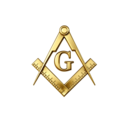
    The Square and Compasses

    The universal emblem of Freemasonry.

    The Square teaches Masons to square their actions by the square of virtue with all mankind. The Compasses remind us to circumscribe our desires and keep our passions within due bounds toward all, especially our brethren. Together they represent the balance between morality and self-restraint that defines the Masonic life.

    The All-Seeing Eye

    A symbol of the Great Architect of the Universe.

    The All-Seeing Eye reminds every Mason that the thoughts and actions of men are observed by the Supreme Being — that no sun, moon, or star shines with such brilliance as the eye of the Creator. It is a call to conduct oneself with integrity in every moment, whether observed by men or not.

    The Blazing Star

    Divine providence and guiding light.

    Positioned at the center of the Lodge, the Blazing Star represents divine providence guiding the traveling Mason through the journey of life. To some it recalls the Star of Bethlehem; to others, the light of truth that illuminates the path of the just.

    The Mosaic Pavement

    The checkered floor of King Solomon's Temple.

    The alternating black and white squares of the Lodge floor represent the mixed nature of human existence — good and evil, joy and sorrow, light and darkness. Masons walk upon it to remember that life is a chequered path, and that fortitude in the face of both is a mark of true character.

    The 24-Inch Gauge

    A working tool of the Entered Apprentice.

    Divided into twenty-four equal parts, this common two-foot rule reminds a Mason to divide the day into three equal portions: eight hours for the service of God and a distressed worthy brother, eight for his usual vocations, and eight for refreshment and sleep.

    The Common Gavel

    The tool of the Worshipful Master.

    Operative Masons used the gavel to break off the rough corners of stones. Speculatively, it teaches us to divest our hearts and consciences of the vices and superfluities of life, fitting our minds — as living stones — for the spiritual building not made with hands.

    The Volume of the Sacred Law

    The great light of Masonry.

    Opened upon every altar, the Volume of the Sacred Law is the rule and guide of a Mason's faith. Masonry does not prescribe which sacred book a man reveres — only that he acknowledges a source of higher moral authority than himself.

    The Rough and Perfect Ashlars

    The stones of self-improvement.

    The Rough Ashlar is the stone as taken from the quarry — man in his natural, imperfect state. The Perfect Ashlar is that same stone shaped and smoothed for the builder's use — man refined by education, virtue, and the labors of a lifetime.

    The Point Within a Circle

    The boundary of a Mason's duty.

    The point represents the individual Mason; the circle, the boundary line of his duty to God and man. The two parallel lines flanking it represent the Holy Saints John — patrons of the Craft — and the Volume of the Sacred Law resting above completes the emblem of a well-ordered life.

    The Plumb, the Level, and the Square

    The Movable Jewels of the Lodge.

    The Plumb admonishes us to walk uprightly in our several stations. The Level teaches that we are all traveling upon the level of time to that undiscovered country from whose bourn no traveler returns. The Square teaches morality — the foundation upon which every Masonic virtue is built.

    Interested in learning more?

    Freemasonry has never solicited members — a man must seek the Craft of his own free will and accord. If these ideas resonate with you, we welcome your inquiry.

    Return Home